Reported by Thomas Reuben Mollel
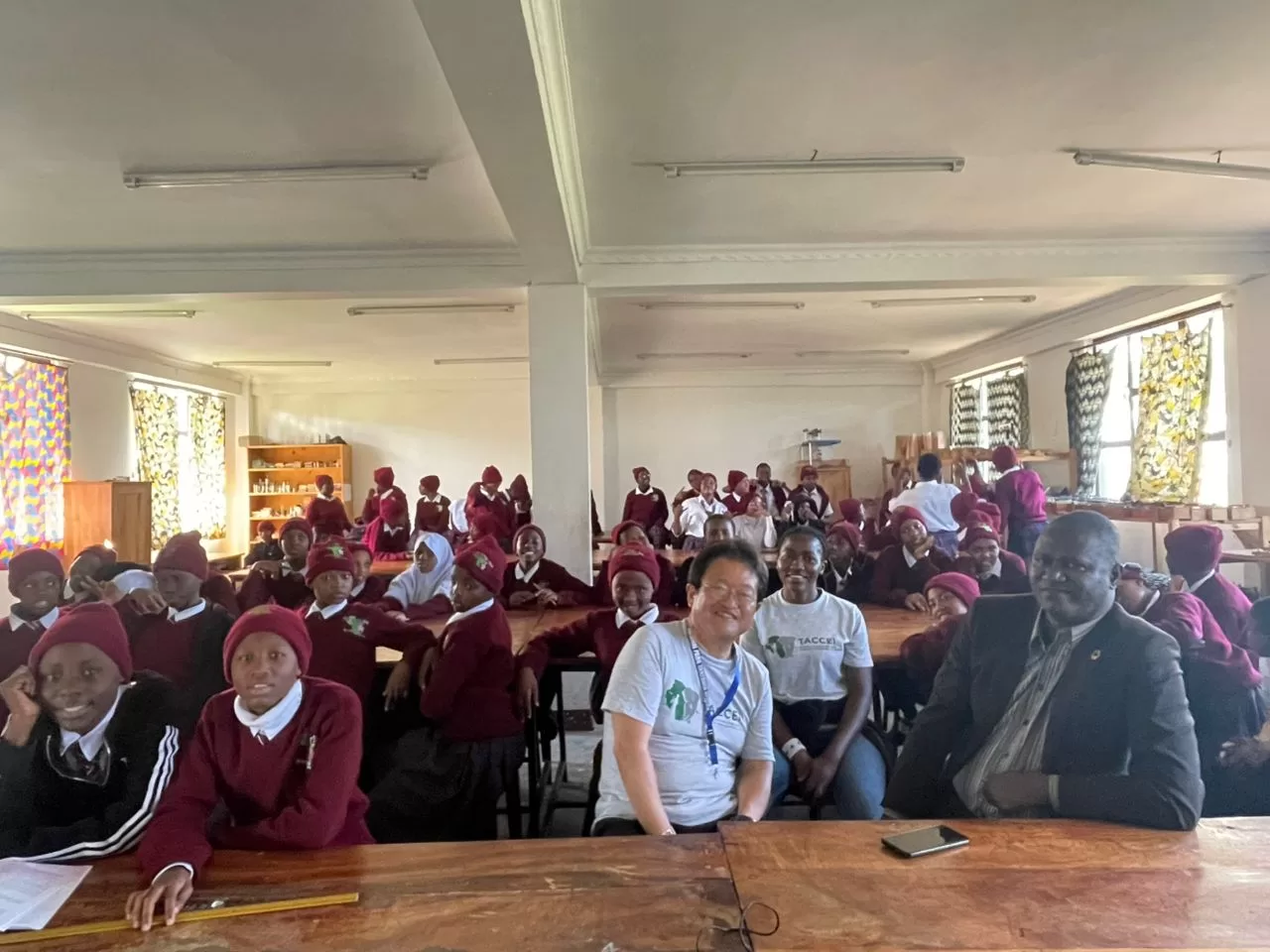
Students of Sakura Girls Secondary School during an inspirational STEM, innovation, and sustainability engagement session conducted by Eng. Nozomu Munemura and Ms. Magdalena from the Tanzania Community Center for Environment and Innovation (TACCEI) on 1st May 2026 in Arusha, Tanzania.
On 1st May 2026, Sakura Girls Secondary School (SGSS) in Arusha, Tanzania, in collaboration with Savannah Vision Tanzania (SVTa), proudly hosted distinguished international guest Eng. Nozomu Munemura and Ms. Magdalena from the Tanzania Community Center for Environment and Innovation (TACCEI) for an inspiring STEM, innovation, and sustainability engagement session with students.
The educational engagement focused on promoting Science, Technology, Engineering and Mathematics (STEM) education, environmental sustainability, innovation, leadership, and sustainable development among girls and young women in Tanzania.
Globally and within Africa, women continue to be underrepresented in engineering, innovation, and technology-related fields despite growing recognition of the importance of gender inclusion in sustainable development. According to UNESCO, women currently represent only about 35% of STEM graduates globally, while in many African countries fewer than one in three STEM graduates are women.
In Tanzania, gender disparities remain particularly significant in engineering and advanced science education. A World Bank-supported policy analysis on STEM higher education in Tanzania reported that female students accounted for only 33.6% of STEM higher education enrollment, while women represented only 18.5% of students enrolled in engineering programmes. These statistics highlight the urgent need for increased investment in girls’ education, STEM mentorship, innovation-oriented learning, and leadership development.
As a community-centered organization working to empower marginalized rural communities through education, environmental sustainability, sustainable livelihoods, and partnerships, Savannah Vision Tanzania (SVTa) continues strengthening efforts to promote girls’ participation in STEM education and sustainable development initiatives in Tanzania.
Research and global development institutions increasingly recognize that improving girls’ participation in STEM education is critical for accelerating innovation, strengthening economic competitiveness, promoting inclusive growth, and enhancing national capacity to address environmental and technological challenges. UNESCO further emphasizes that closing the STEM gender gap can significantly contribute to sustainable national development, resilience, and future workforce competitiveness.
Eng. Nozomu Munemura delivered an impactful presentation on engineering innovation, creativity, and technological advancement. He shared his extensive professional experience in industrial product innovation and safety engineering, including his contribution as the patent rights owner of one of the world’s safest ergonomic car seat technologies used in vehicles such as the Subaru Legacy, recognized in Japan for outstanding passenger safety standards.
Currently, Eng. Munemura continues serving in the Intellectual Property Department, Research and Development Division of NHK Spring Co. Ltd following his retirement, where he remains actively engaged in advancing technological innovation and intellectual property development.
“Innovation and education are powerful tools for building safer, more sustainable societies,” Eng. Munemura emphasized while encouraging students to pursue science, engineering, and technology careers with confidence and determination.
Through his presentation, students gained valuable insights into how engineering and innovation can create practical solutions that improve lives, enhance safety, and contribute to sustainable societies. He encouraged students to embrace creativity, discipline, continuous learning, and resilience as key foundations for future success in science and technology careers.
Ms. Magdalena presented the work and vision of TACCEI, highlighting the organization’s contributions to environmental conservation, sustainable livelihoods, community empowerment, and education development in Tanzania. Her presentation inspired students to recognize the important role young people can play in promoting environmental sustainability, social innovation, and inclusive community development.
The interaction provided students with a unique opportunity to engage directly with international professionals and innovators, broadening their understanding of global challenges and opportunities in sustainable development, technology, leadership, environmental conservation, and international cooperation. 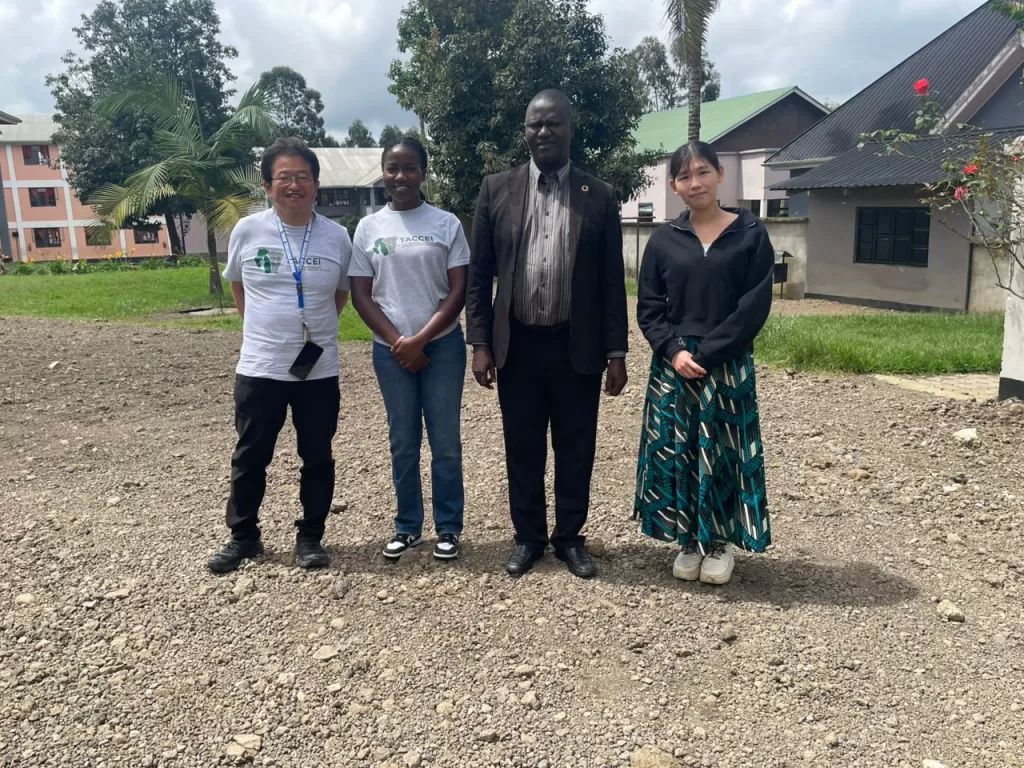
The visit strongly aligns with the mission of Savannah Vision Tanzania (SVTa) and Sakura Girls Secondary School to empower young women and marginalized communities through quality education, STEM advancement, innovation, environmental sustainability, and international partnerships.
As part of ongoing efforts to improve girls’ education in Tanzania, Sakura Girls Secondary School has continued expanding access to quality secondary and advanced-level education for young women, particularly those from underserved rural communities. Recently, the school introduced Advanced Level science combinations with strong focus on Physics, Chemistry, Biology, and Mathematics subjects to strengthen girls’ participation in science education and prepare more female students for future careers in engineering, medicine, environmental sciences, technology, research, and innovation-related professions.
Through partnerships, mentorship opportunities, STEM-focused engagement, leadership development, and investments in science education infrastructure, SGSS and SVTa seek to contribute to closing the gender gap in STEM fields while empowering future women leaders and innovators capable of contributing to Tanzania’s sustainable national development and transformation agenda.
The engagement also contributes to advancing several United Nations Sustainable Development Goals (SDGs), particularly SDG 4 (Quality Education), SDG 5 (Gender Equality), SDG 9 (Industry, Innovation and Infrastructure), SDG 13 (Climate Action), and SDG 17 (Partnerships for the Goals).
Sakura Girls Secondary School and Savannah Vision Tanzania sincerely appreciate the continued support and collaboration of international partners and stakeholders dedicated to promoting STEM education, sustainable innovation, environmental stewardship, youth empowerment, and sustainable community development in Tanzania.
The school remains committed to creating transformative learning opportunities that expose students to global knowledge, mentorship, innovation, and leadership experiences that prepare them to become future scientists, engineers, innovators, and sustainability leaders for Tanzania and the world.