Delegation meets Form Five students and discusses academic performance at the Bangata campus
Bangata, Arusha District, Tanzania | Visit date 5 October 2026
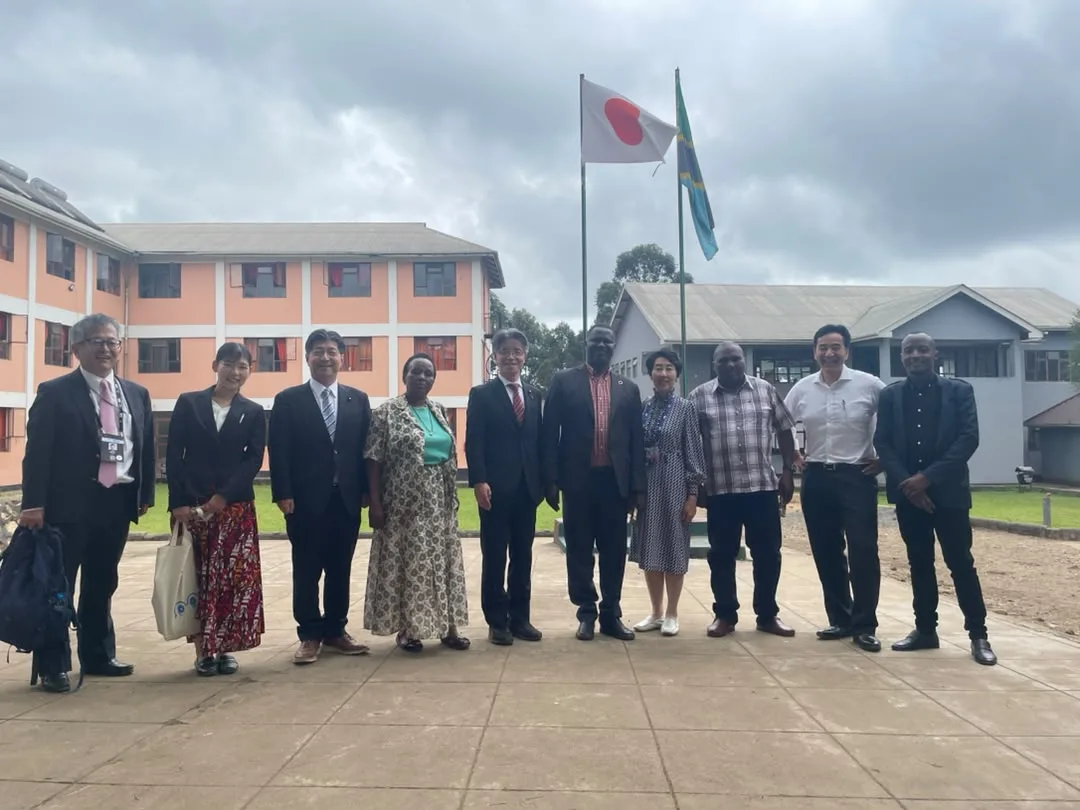
Four members of Japan’s National Diet and His Excellency Yoichi Mikami, Ambassador of Japan to the United Republic of Tanzania, visited Sakura Girls Secondary School in Bangata, Arusha District, on 5 October 2026. The programme included a school briefing, a campus tour and a discussion with Form Five students, focusing on Sakura’s approach to girls’ education, STEM and leadership.
Members of Japan’s National Diet and H.E. Yoichi Mikami visit Sakura Girls Secondary School in Bangata on 5 October 2026.
The parliamentarians were in Arusha for the 153rd Assembly of the Inter-Parliamentary Union (IPU), held from 5 to 9 October 2026.
The parliamentary delegation comprised Dr. Daishiro Yamagiwa and Ms. Yuki Waseda of the House of Representatives, and Mr. Shigenori Kenzaka and Mr. Ryuji Satomi of the House of Councilors.
Mr. Hiroyuki Nomura, First Secretary, and Ms. Fumiyo Jin, Third Secretary, also joined the visit, together with an interpreter.
School briefing and academic performance
The visitors were received by Mr. Thomas Reuben, Headmaster; Ms. Sae Noborio, Technical Representative of Group Kilimanjaro Inc. (GKI), Japan; Mr. Linda Sanare, incoming School Director; and Ms. Victoria Tomito, outgoing School Director.
Mr. Reuben outlined the school’s mission, educational priorities and development before the visitors toured its learning facilities.
Members of the National Diet raised several questions during the briefing. One asked how Sakura’s national examination performance compared with that of other Tanzanian secondary schools and what the results indicated about its national standing.
Mr. Reuben described Sakura as one of the leading girls’ schools in Arusha Region and Tanzania. He explained that all its Form Four candidates had passed their national examinations and achieved results qualifying them for Advanced Level secondary education.
Published 2025 Certificate of Secondary Education Examination (CSEE) results from the National Examinations Council of Tanzania (NECTA) show that all 45 Sakura candidates passed. Thirty-nine achieved Division I and six Division II.
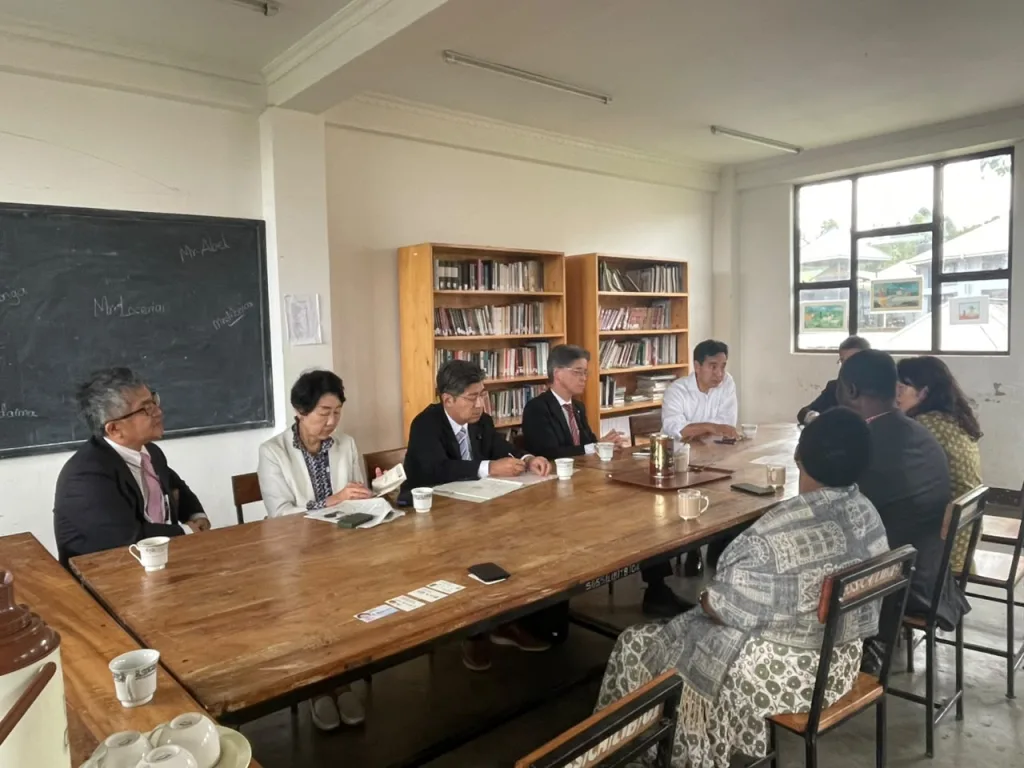
The delegation receives a briefing on Sakura’s educational mission and engages with school representatives.
School leadership said the visitors appreciated the warm reception and responded favourably to Sakura’s educational initiatives.
Form Five students and future opportunities
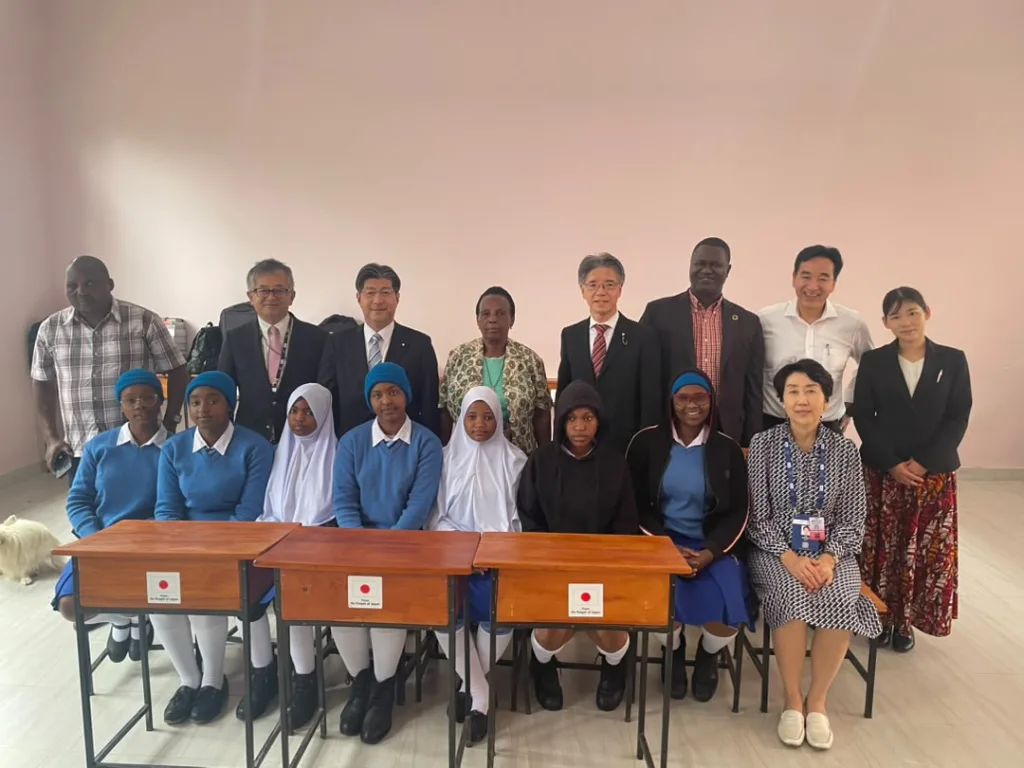
The delegation also met Form Five students. Sakura introduced Advanced Level education in July 2026, extending its educational pathway beyond Form Four towards university, professional training and future careers.
Ms. Debora Mwanga, an Advanced Level student, thanked the delegation for visiting Sakura and taking time to speak with students. She also expressed appreciation for the continuing friendship between the school and Japan.
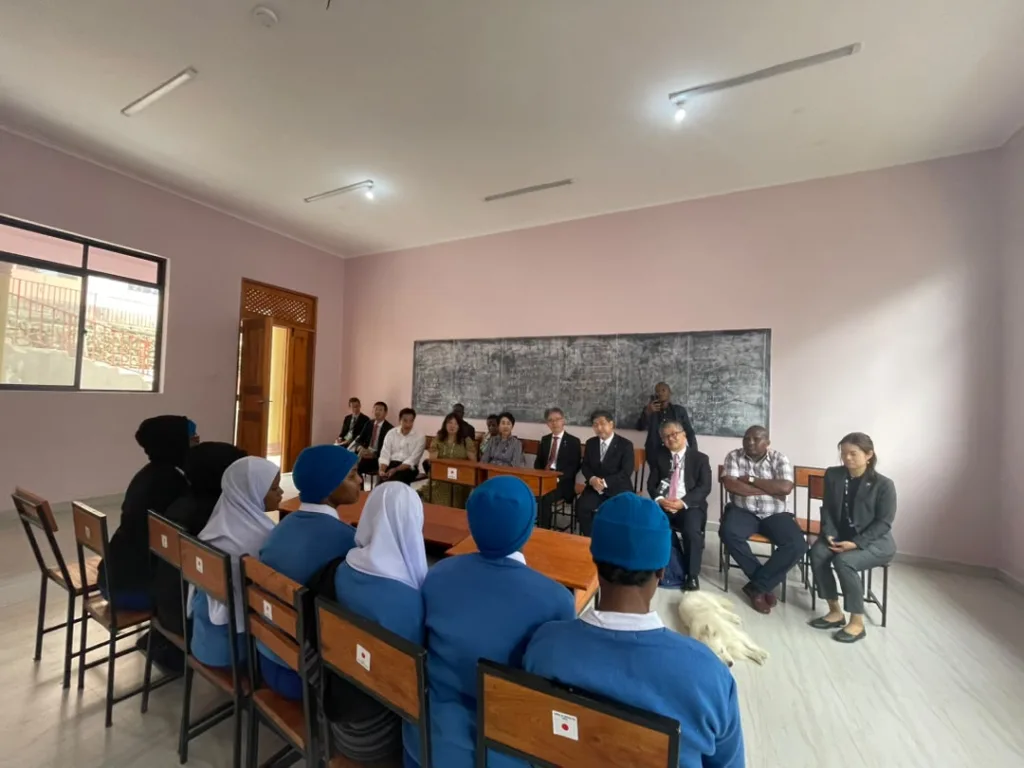
The visiting delegation engages with Form Five students at Sakura Girls Secondary School.
Sakura’s mission is to give girls from economically disadvantaged households sustained access to quality secondary education, helping them develop their abilities and pursue further study.
Practical learning in physics, chemistry and biology laboratories supports the school’s emphasis on science, technology, engineering and mathematics (STEM). Debates and speeches give students opportunities to present ideas and practise leadership.
In a statement for this report, Mr. Thomas Reuben, Headmaster of Sakura Girls Secondary School, said:
“Sakura’s vision is to equip girls from economically disadvantaged households with the knowledge, skills and confidence to shape their own futures. Through STEM education and leadership development, we want them to pursue further study and meaningful careers, contribute as scientists and innovators, and lead in their communities and country.
“Advancing girls’ education and women’s empowerment supports Tanzania’s development priorities and the global Sustainable Development Goals, especially SDG 4 on quality education, SDG 5 on gender equality and SDG 17 on partnerships. We thank the members of Japan’s National Diet and H.E. Ambassador Yoichi Mikami for engaging with our students and look forward to educational cooperation that deepens Tanzania-Japan friendship and benefits students and communities in both countries.”
Tanzania and Japan educational cooperation
Support from the Government of Japan, through its Grant Assistance for Grassroots Human Security Projects, helped develop facilities for Sakura’s Advanced Level expansion. Ambassador Mikami attended the programme’s official inauguration on 25 July 2026.
Mr. Reuben also recognised the Embassy of Japan in Tanzania’s continued engagement with the school.
In sharing the visit, Savannah Vision Tanzania (SVTa) highlights Sakura’s work to expand girls’ educational opportunities and prepare future women leaders. The school hopes to build on the exchange through continued cooperation that strengthens Tanzania-Japan friendship and benefits students and communities in both countries.
Further school information and updates: Sakura Girls Secondary School website and Facebook page.