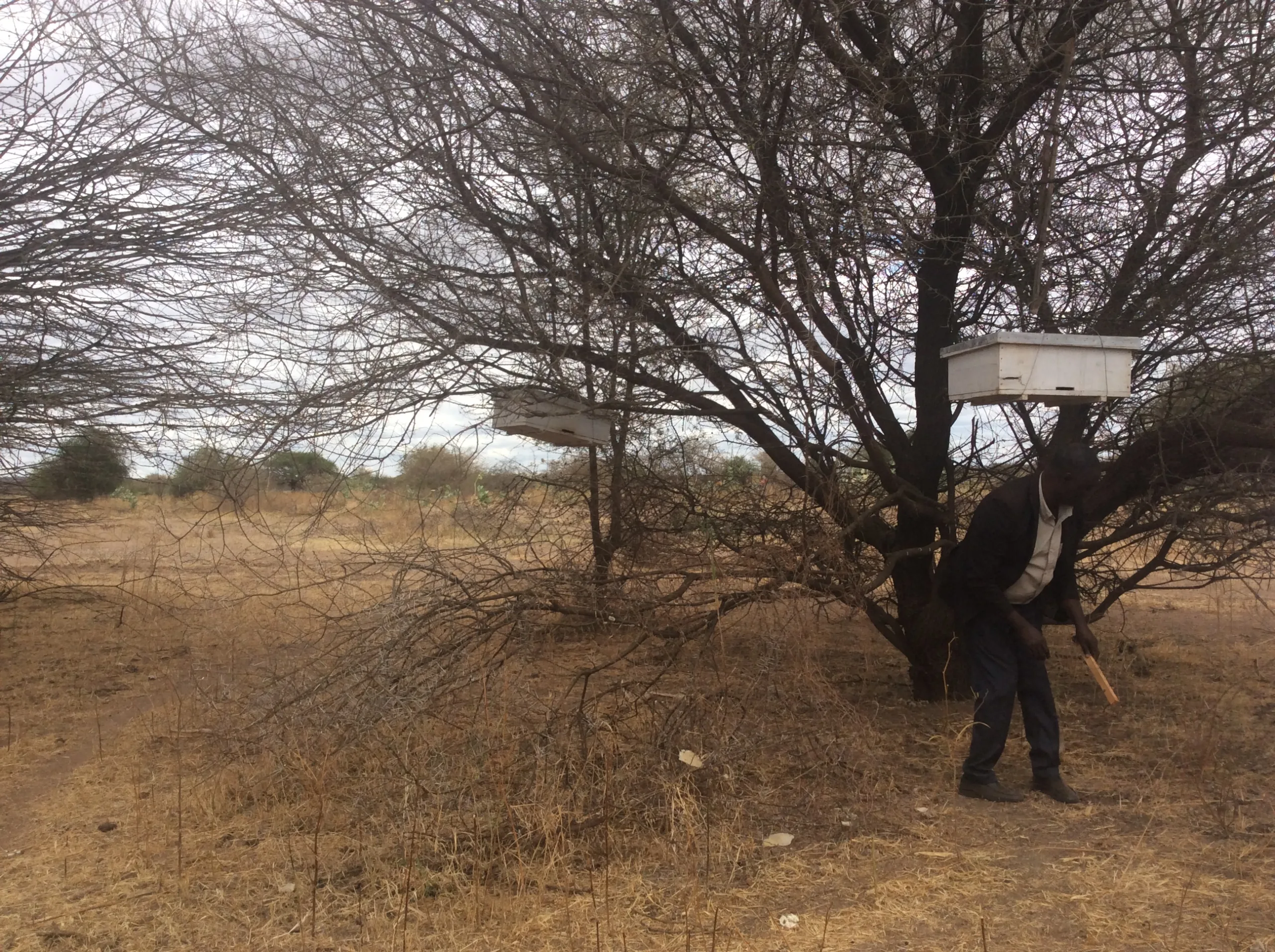
SVTa’s latest monitoring visit found strong colony establishment and encouraging honey production, alongside challenges involving hive management, water scarcity, declining pasture and climate-related pressure on household food production.
NAITOLIA, MONDULI DISTRICT | 11 SEPTEMBER 2026
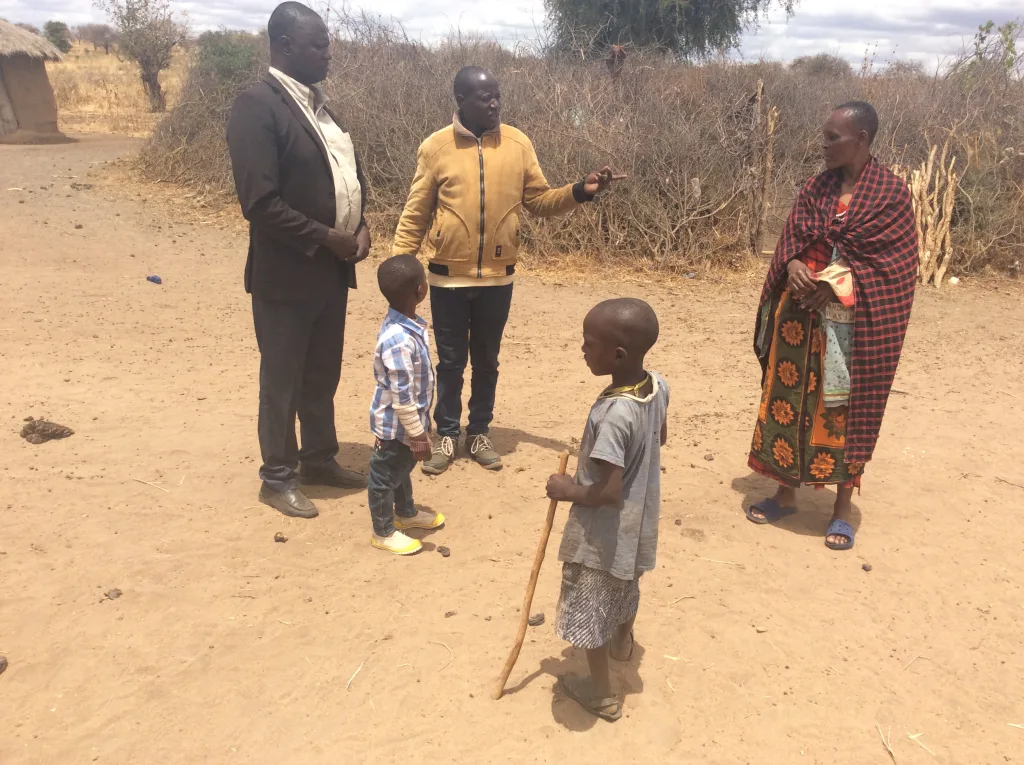
On 11 September 2026, Savannah Vision Tanzania (SVTa) conducted a routine monitoring and evaluation visit to Naitolia Village in Monduli District. The visit assessed the performance of the Naitolia beekeeping project and documented environmental and livelihood conditions affecting participating Maasai households.
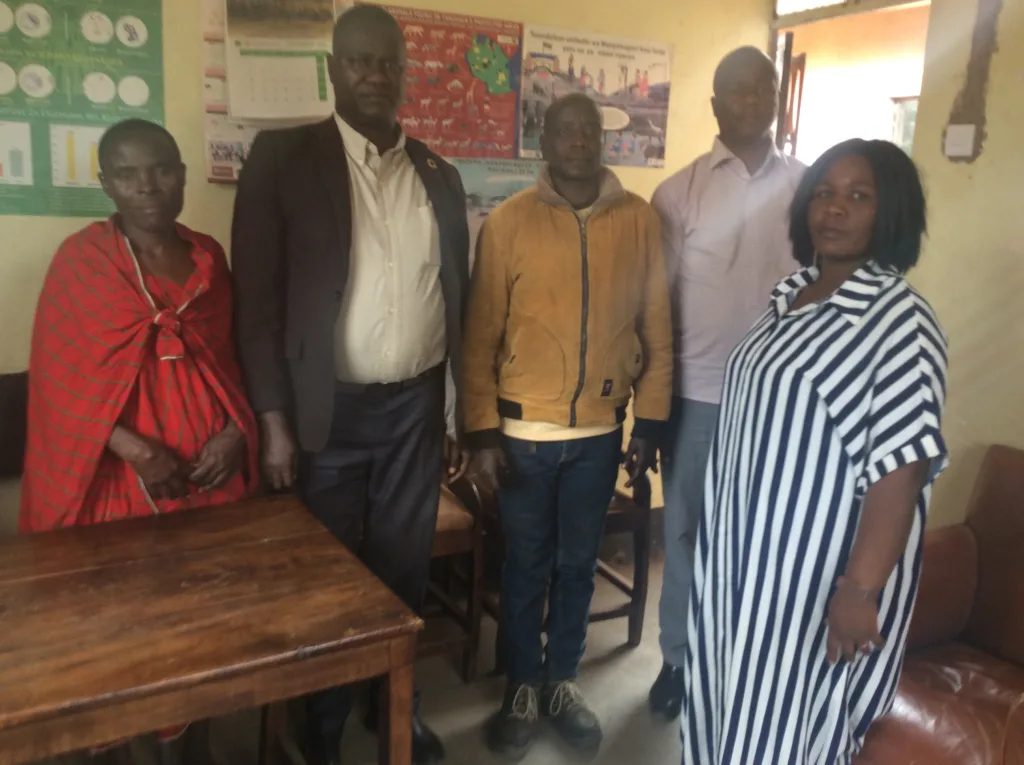
The SVTa monitoring team comprised Thomas Reuben, Sonnia Thomas, Grace Paulo and Augustino Mollel. The team was accompanied by Mr Sambweti, SVTa’s contact person in Naitolia and one of the community members benefiting from the organisation’s initiatives.
Mr Sambweti maintains regular communication with participating households, follows project developments between formal monitoring visits and reports progress and emerging challenges to SVTa.
Engagement with village leadership
Upon arrival, the team reported to the Naitolia Village Office and signed the visitors’ register. The team also met with the Naitolia Village Chairman and held a short discussion on the overall condition of the village, with particular attention to the beekeeping project, water availability, pasture conditions, livestock and the latest maize and bean harvests.
The SVTa team briefed the Village Chairman on its planned follow-up visit between October and November 2026, during which 40 additional top-bar beehives are expected to be distributed to selected economically underprivileged households in Naitolia.
The team explained that beneficiary selection will be preceded by a household needs assessment. Selected households will also receive practical beekeeping training, and suitable apiary sites will be identified before the hives are installed.
The meeting provided an opportunity for SVTa and the village leadership to review current challenges, consider the project’s next phase and reaffirm the importance of community participation in beneficiary selection, hive management and long-term monitoring.
Climate and wildlife pressures affect household production
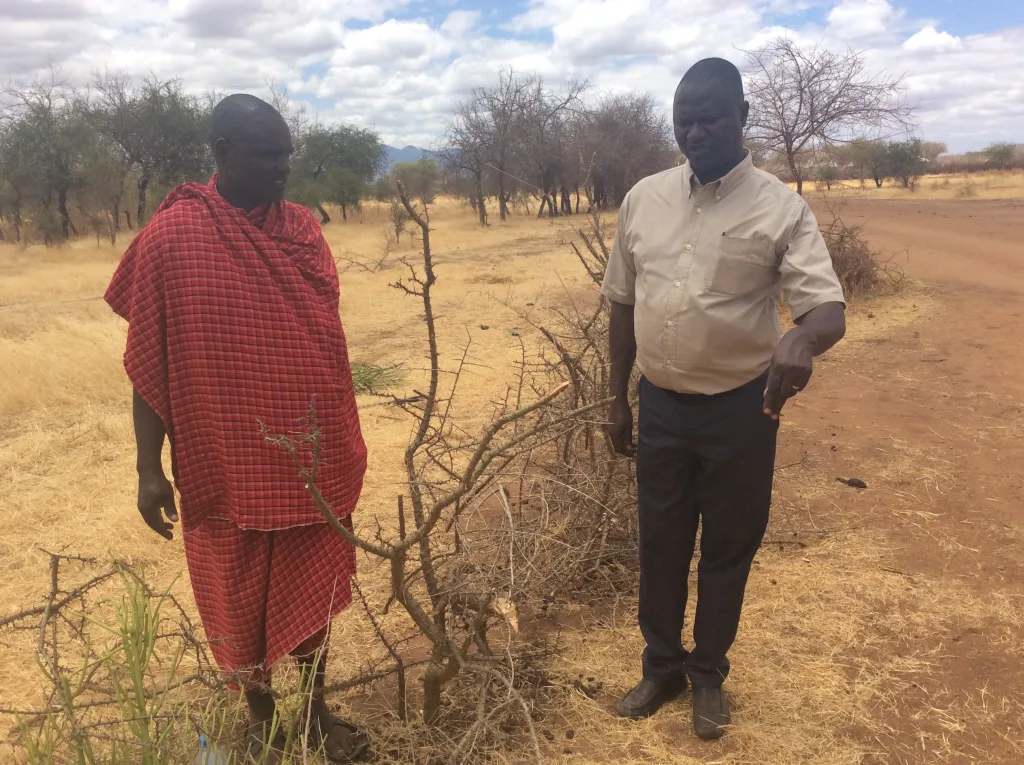
Village representatives reported that the most recent maize and bean harvest was below expectations. Periods of excessive rainfall affected crop performance, while wildlife caused additional damage to cultivated fields. These combined pressures reduced the amount of food harvested by local households.
At the time of the visit, water and pasture were becoming increasingly scarce as dry-season conditions intensified. The community hopes that the coming rainy season will replenish local water sources and stimulate new pasture growth for livestock.
These conditions illustrate the vulnerability of pastoralist and agro-pastoralist households to climate variability, water scarcity and human–wildlife interactions. They also reinforce the need for diversified, climate-resilient livelihood activities that are less dependent on annual crop production.
Community beekeeping offers such an opportunity. When responsibly managed, it can generate household income while creating an economic incentive to protect flowering trees, natural vegetation and the wider landscape on which healthy bee colonies depend.
Approximately 98% hive occupancy observed
The monitoring team inspected most of the project-supported beehives and observed active bee colonies in approximately 98% of the hives examined. This high observed occupancy rate is an encouraging indication of successful colony establishment and the area’s suitability for beekeeping.
A small number of hives had been affected by wasps and other insects. In some cases, hive owners had not acted early enough to remove the pests before they disrupted colony occupation.
The SVTa team cleaned several affected hives and returned them to suitable positions. With continued monitoring and improved apiary management, the team expects that these hives can be recolonised.
The findings demonstrate the need for continued practical training in:
- Routine hive inspection
- Early identification and control of pests
- Apiary hygiene
- Colony-health monitoring
- Maintenance of hive stands
- Management of surrounding vegetation
- Timely corrective action when a colony is disturbed
Encouraging production, but harvesting must improve
Community feedback indicated that honey production was generally encouraging. However, some beekeepers did not harvest at the optimum time.
When harvesting is delayed, bees may consume a substantial proportion of their stored honey to maintain the colony and support brood development. Some combs may also become occupied by developing brood, reducing the quantity of honey available for harvesting.
Better harvesting calendars and practical guidance on recognising mature, capped honeycombs could significantly improve yields while protecting colony health. Training will also address hygienic harvesting, safe handling, storage and preparation of honey for processing and sale.
The field visit did not constitute a complete production audit, and reliable household-level records of honey quantities were not available. Strengthening recordkeeping will therefore be an important component of future monitoring. This will allow SVTa and participating households to track harvest volumes, income, colony performance and seasonal changes more accurately.
Trusted community contact strengthens monitoring
Mr Sambweti’s involvement provides an important link between SVTa, participating households and village leadership. His local knowledge supports timely communication, early identification of challenges and continuity between scheduled monitoring visits.
In August 2026, Mr Sambweti secured employment in a security role at A to Z Textile Mills Ltd in Kisongo, Arusha. He nevertheless continues to serve as SVTa’s community contact and accompanied the team throughout the monitoring visit.
His participation demonstrates the value of trusted community contact persons who can provide regular information and help ensure that project decisions remain responsive to local conditions.
Community demand for additional beehives is growing
The progress of the project has generated strong interest among Naitolia residents, with many community members requesting additional beehives.
In response to this demand, SVTa is producing 80 top-bar beehives at its office in Monduli. The hives are expected to be distributed between October and November 2026:
- Naitolia Village: 40 top-bar beehives
- Selela Village: 40 top-bar beehives
The new hives will be allocated to economically underprivileged households. Before distribution, SVTa will conduct transparent household needs assessments to identify suitable beneficiaries.
Selected households will receive practical training, and SVTa will work with community members to identify appropriate apiary sites. Site selection will consider vegetation, water availability, shade, accessibility, security and the need to minimise disturbance to bees and neighbouring households.
Locally produced hives designed for durability
SVTa’s top-bar beehives are being constructed with particular attention to strength and durability. During the monitoring visit, the team observed that the hives produced for the SVTa project appeared stronger and more durable than several other donated hives found in the area.
Durability is important because a well-constructed hive can support production over many seasons, reducing replacement costs and increasing the long-term value of the investment for participating households.
However, durable construction alone is not sufficient. Correct installation, protection from termites and moisture, regular inspection and responsible harvesting will remain essential to achieving sustained benefits.
Connecting beekeepers to the honey value chain
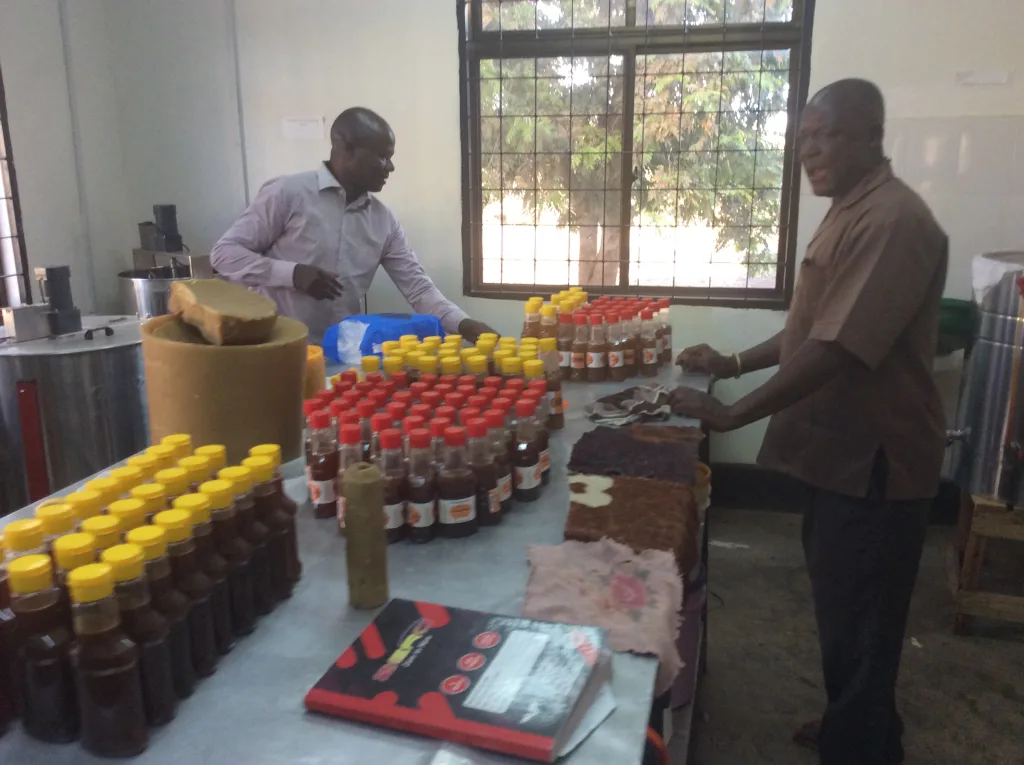
As part of the field mission, the team visited the Nashipay Honey Processing Factory in Makuyuni. The facility processes honey produced by beekeepers from Naitolia and surrounding villages, providing an important connection between household production and the wider honey market.
At the time of the visit, one kilogram of processed honey was selling for approximately TZS 15,000. This price illustrates the income potential of quality honey production when beekeepers have access to reliable processing, packaging and marketing services.
The factory’s proximity to Naitolia provides an important opportunity to strengthen the local honey value chain. To benefit fully, producers will require continued support in:
- Harvest timing and quality control
- Hygienic extraction and handling
- Honey aggregation
- Processing and packaging
- Production recordkeeping
- Market access and price information
Developing these areas could enable participating households to move beyond small, irregular sales and participate more consistently in a structured local honey market.
Exploring opportunities for future collaboration
During the visit, the team also discussed the potential value of engaging organisations whose work relates to community livelihoods, environmental restoration and conservation.
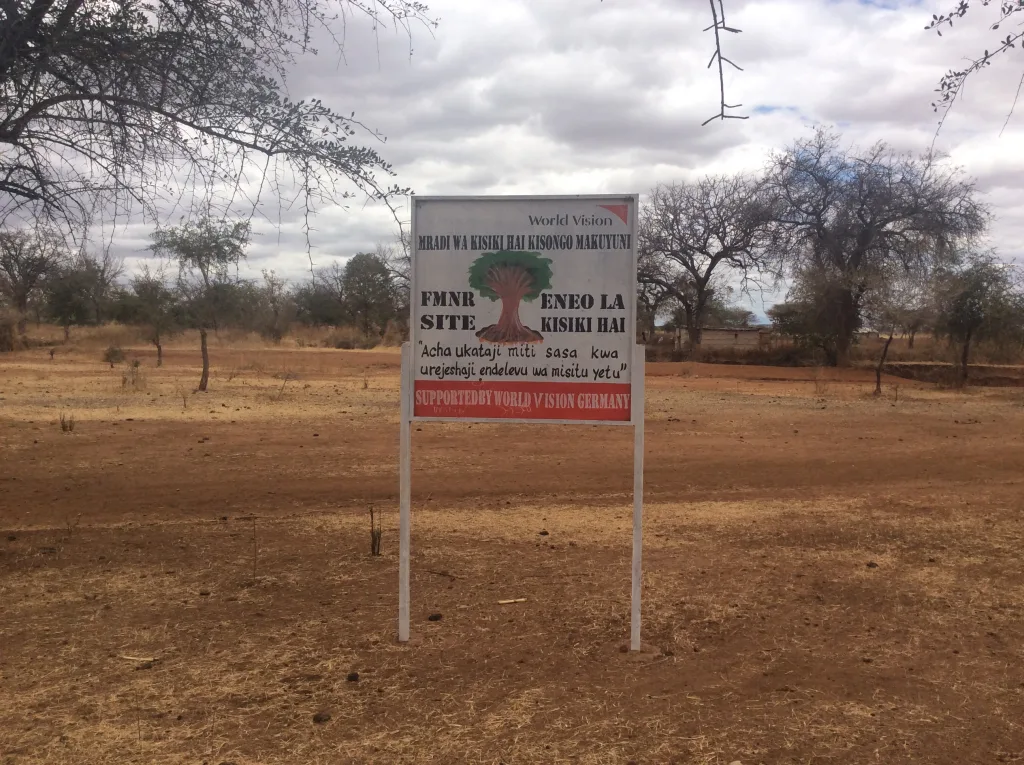
The organisations considered included World Vision Tanzania and the African Conservation Foundation. The discussion focused on the possibility of exploring future collaboration that could strengthen community beekeeping, landscape restoration, technical capacity, environmental education and climate-resilient livelihoods.
No formal partnership has yet resulted from these discussions. However, SVTa believes that carefully developed collaboration with organisations sharing similar objectives could expand the project’s environmental and livelihood benefits while complementing existing local initiatives.
Priorities for the next phase
Based on the monitoring findings, SVTa will prioritise the following actions:
- Complete and distribute 80 new top-bar beehives in Naitolia and Selela.
- Conduct household needs assessments before selecting new beneficiaries.
- Provide practical training in hive management, pest control and responsible harvesting.
- Support beneficiaries in selecting appropriate apiary sites.
- Improve harvesting schedules and post-harvest honey handling.
- Introduce simple household-level production and income records.
- Strengthen connections between community beekeepers and local processors.
- Continue monitoring colony occupation, honey production and household benefits.
- Document the project’s contribution to vegetation conservation, pollination and climate-resilient livelihoods.
- Explore appropriate technical and funding partnerships for responsible project expansion.
A promising nature-positive livelihood
The team returned to Monduli at approximately 7:00 p.m., concluding a successful and informative field mission.
The visit confirmed that the Naitolia beekeeping project is progressing well. High observed hive occupancy, encouraging honey production, strong community interest and access to a nearby processing facility demonstrate considerable potential for responsible expansion.
The visit also identified areas requiring further attention, particularly pest management, harvest timing, recordkeeping and regular technical support.
Beekeeping provides more than an additional source of household income. It can help rural families diversify their livelihoods, reduce dependence on climate-sensitive crop production and strengthen incentives to conserve trees and natural vegetation.
Partner with Savannah Vision Tanzania
Savannah Vision Tanzania welcomes collaboration with donors, technical institutions, responsible businesses and development partners interested in expanding community-based beekeeping, strengthening the honey value chain and supporting climate-resilient livelihoods among underserved rural and Indigenous communities in Tanzania.
Support for the next phase can help SVTa:
- Provide durable beehives to economically underprivileged households
- Deliver practical training and regular technical follow-up
- Improve honey quality, processing and market access
- Strengthen project monitoring and production records
- Connect livelihood improvement with landscape restoration
- Expand biodiversity conservation and environmental education
Beyond the Naitolia project, SVTa participates in institutional relationships and sustainability networks that advance learning, collaboration and community-led development. These include The SOL Foundation, The Jena Declaration on Sustainability, Benevity and Global Ambassadors of Sustainability—GAoS.
Connect with Savannah Vision Tanzania
Savannah Vision Tanzania
Empowering rural and Indigenous communities through education, sustainable livelihoods, environmental stewardship and strategic partnerships.